Modern Era (2020s–Today): Multi-Cloud and Global Scale
Today, cloud computing is the backbone of much of the internet and modern business.
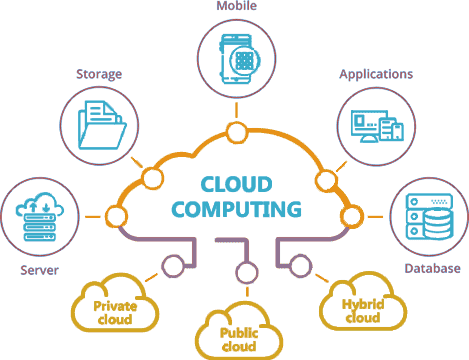
Many organizations use a multi-cloud strategy, combining services from multiple
providers (for example, AWS and Azure together) to increase reliability, avoid vendor lock-in, and
take advantage of each platform’s strengths.
Hybrid cloud models are also common. In a hybrid setup, a company might keep some
sensitive systems on-premises in its own data centers while using public cloud services for other
workloads. This approach balances control, security, and flexibility.
Edge computing has emerged as another important trend. Instead of running all
processing in a distant data center, some workloads run closer to users or devices to reduce
latency.
This is especially important for Internet of Things (IoT) devices, real-time applications, and
autonomous systems.
Finally, cloud providers now offer powerful environments for
artificial intelligence and machine learning, including access to specialized
hardware
like GPUs and TPUs. These tools make it possible to train and deploy advanced models at a scale that
would be difficult for most organizations to achieve on their own.
From mainframes and grid computing to global-scale cloud platforms, the history of cloud service
providers shows a steady move toward more shared, flexible, and on-demand computing. That evolution
continues today as new technologies and services are built on top of the cloud.